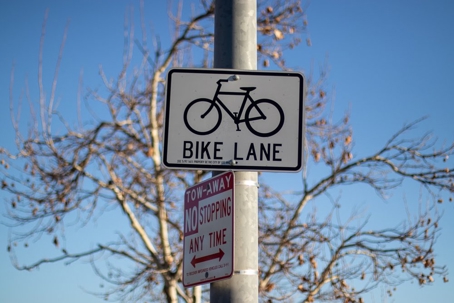
E-bikes have become a fixture on Salt Lake City streets, from the 9-Line Trail along 900 South to the bike lanes threading through downtown, and their popularity has grown steadily across the state.
As more riders of all ages take to public roads, the Utah Legislature has responded with meaningful new safety rules. House Bill 381 (HB 381), signed into law during the 2026 General Session, introduces the most significant update to Utah's e-bike regulations in years, and its first provisions take effect on May 6, 2026.
Whether you're a regular commuter, a parent whose child rides to school, or someone who shares Salt Lake City roads with e-bike traffic every day, knowing what this law requires (and what penalties it carries) matters now. Keep reading to learn all you need to know about Utah’s new e-bike Law.
What Is Utah's New E-Bike Law, and Who Does HB 381 Affect?
HB 381 amends multiple sections of Utah's traffic and motor vehicle codes to bring clearer, enforceable safety requirements to e-bike and electric motorcycle riders across the state. The law introduces new helmet mandates, tightens age restrictions, updates impaired riding rules, and draws a sharper legal line between e-bikes and higher-powered electric motorcycles.
Most provisions take effect May 6, 2026. A second wave of requirements, focused on youth rider education and licensing, comes into force in 2027.
These changes reflect a growing body of evidence that e-bikes, particularly high-powered models, carry risks that standard bicycle rules were never designed to address.
Key E-Bike Rules Taking Effect May 6, 2026
Several enforceable changes arrive this month:
Helmet requirements for riders under 21.
Anyone under 21 must wear a helmet when operating an e-bike, e-scooter, or electric motorcycle on public roads. Helmets for e-bikes and e-scooters must comply with U.S. Consumer Product Safety Commission standards.
E-motorcycle helmets must also meet the Department of Transportation's Federal Motor Vehicle Safety Standard 218.
Capt. Chase Pili with the Utah Department of Natural Resources Division of Law Enforcement explained that "with those higher safety ratings, those have been tested with higher speeds to prevent more trauma, especially for our youth."
Age restrictions for high-powered devices.
Riders under 16 may not operate high-powered e-bikes (that is, devices capable of exceeding 20 miles per hour on motor power alone) on public roads. Children under 8 may not ride any e-bike with the motor engaged on public property.
DUI laws now extend to e-bike riders.
HB 381 makes it unlawful to operate any e-bike or electric motorcycle on public roads while impaired or carrying an open alcoholic container.
Violations carry real consequences.
Penalties include a minimum $25 fine, and law enforcement is authorized to hold an e-bike pending release to a parent or guardian.
E-Bikes vs. Electric Motorcycles: A Legal Distinction That Now Has Consequences
One of the most practically significant aspects of HB 381 is the clearer line it draws between conventional e-bikes and higher-powered devices now legally classified as electric motorcycles. This distinction affects licensing requirements, age limits, and where these vehicles can lawfully operate.
Under Utah law, an electric assisted bicycle must have a motor of no more than 750 watts, fully operable pedals, and permanently affixed cranks. Class 1 and Class 2 models travel no faster than 20 mph; Class 3 models can reach 28 mph and must be equipped with a speedometer.
An electric motorcycle, by contrast, is powered by a motor of more than 750 watts and is capable of exceeding 20 mph on motor power alone, without any pedaling. Under HB 381, operating one of these devices requires a valid driver's license with a motorcycle endorsement, and no one under 16 may ride one on public roads at all.
This matters because many devices marketed and sold as "e-bikes" may actually meet the legal definition of an electric motorcycle. Parents purchasing high-powered models for their children, and adults buying performance e-bikes, should carefully verify the wattage and top speed of their device before assuming ordinary bicycle rules apply.
Overall, the new Utah e-bike Law aims to prevent and punish misclassification of a vehicle. This now has legal and insurance implications, especially after an accident.
What Changes for Young Riders in 2027
The second phase of HB 381 focuses squarely on youth riders. Beginning in 2027, children between the ages of 8 and 15 must either ride under direct adult supervision (defined in the bill as within visual contact and close enough to give coaching) or complete an online Personal Electric Vehicle Safety Education and Training Program and obtain a Personal Electric Vehicle Safety Certificate.
The certificate will cost $10 and the program will be administered by the Utah Department of Public Safety.
E-Bike Accident Statistics in Utah and Nationwide
The safety concerns behind this legislation are grounded in data, and the numbers are difficult to ignore. In Utah, the Utah Highway Safety Office recorded 2,988 bicycle-related crashes, 2,358 injuries, and 45 fatalities statewide from 2020 through 2024.
Nearly a quarter of those crashes involved riders under age 24, and crashes spike consistently between 3 p.m. and 5 p.m., after-school hours when younger riders are most active.
Utah currently does not distinguish between bicycles and e-bikes on its crash report forms, though that is expected to change in 2026.
Nationally, the U.S. Consumer Product Safety Commission (CPSC) reported that e-bike and micromobility-related injuries rose nearly 21% in 2022 alone and increased at an average annual rate of approximately 23% since 2017. Nearly half of all estimated e-bike injuries recorded between 2017 and 2022 occurred in that single year.
The CPSC documented 233 deaths associated with micromobility devices over that same period. A 2024 study found that head trauma from e-bike accidents in 2022 was approximately 49 times higher than in 2017, a period during which helmet use simultaneously declined by 5.6%.
Salt Lake City's road geometry amplifies these risks for local riders. A UDOT analysis identified State Street as one of the most crash-prone corridors in the Salt Lake Valley, and Redwood Road accounted for multiple spots in the top ten most dangerous non-freeway segments in the region.
Downtown Salt Lake City had some of the most dangerous cycling zones in the state, a pattern driven in part by the city's historically wide streets and long blocks, conditions that encourage higher vehicle speeds and extend the time cyclists spend crossing intersections.
The intersection at 700 East and 200 South, for example, has been repeatedly flagged by safety advocates for its long crossing distance and the way left-turn vehicle pressure places cyclists in a blind spot.
Intersections along 400 South, 900 South, and the South Temple corridor have similarly been identified as high-risk zones for riders.
Frequently Asked Questions About Utah's 2026 E-Bike Law
Does the Utah e-bike helmet requirement apply to adults?
No. HB 381 requires helmets only for riders under 21. Adults 21 and older are not legally required to wear one under this law, though doing so is strongly supported by injury data.
What if my child's e-bike can exceed 20 mph?
If the device can exceed 20 mph on motor power alone and has a motor over 750 watts, it likely qualifies as an electric motorcycle under Utah law, meaning riders under 16 cannot operate it on public roads, and adult riders may need a driver's license with a motorcycle endorsement.
When do the youth supervision and safety certificate rules take effect?
Those requirements apply beginning in 2027, not May 6, 2026. Until then, the age restrictions already in place under prior law continue to apply.
Injured in a Utah E-Bike Accident? Talk to a Salt Lake City Personal Injury Attorney
E-bike accidents can cause serious, life-altering injuries: traumatic brain injuries, spinal cord damage, fractures, and internal trauma.
When those injuries result from someone else's negligence, such as a driver who failed to yield on State Street, a defective product, or a poorly maintained intersection, injured riders and their families in Utah may have the right to seek compensation for medical costs, lost income, and pain and suffering.
Utah's modified comparative fault rules mean that the specifics of your situation matter significantly, and the sooner evidence is preserved, the stronger a potential claim tends to be. Our Salt Lake City bicycle accident lawyers cover the full range of rider injury cases across the city and throughout Utah.
If you or someone you love has been hurt in an e-bike accident in Salt Lake City or anywhere in Utah, our legal team at Cutt, Kendell & Olson Attorneys at Law is ready to help you understand your legal options.
You can reach Cutt, Kendell & Olson Attorneys at Law at (801) 901-3470 for a free consultation, or take a moment to complete the contact form on our website. We are ready to review your case and explain your rights.